Are Wired Cameras More Reliable? The Real Answer

A camera can have sharp 4K video and useful mobile alerts, but neither matters much if it drops offline when you need footage. So, are wired cameras more reliable? In most Burlington and GTA homes and small businesses, yes - particularly when the system is professionally designed and installed. But “wired” can mean different things, and the right choice depends on your property, coverage needs, network, and tolerance for maintenance.
What camera reliability really means
Reliability is more than whether a camera powers on. A dependable security system needs to keep recording, maintain a stable connection, capture usable footage in low light, and let you find that footage later. It also needs to continue working through the day-to-day conditions that affect local properties: cold winters, heavy rain, busy Wi-Fi networks, power interruptions, and changing landscaping or building layouts.
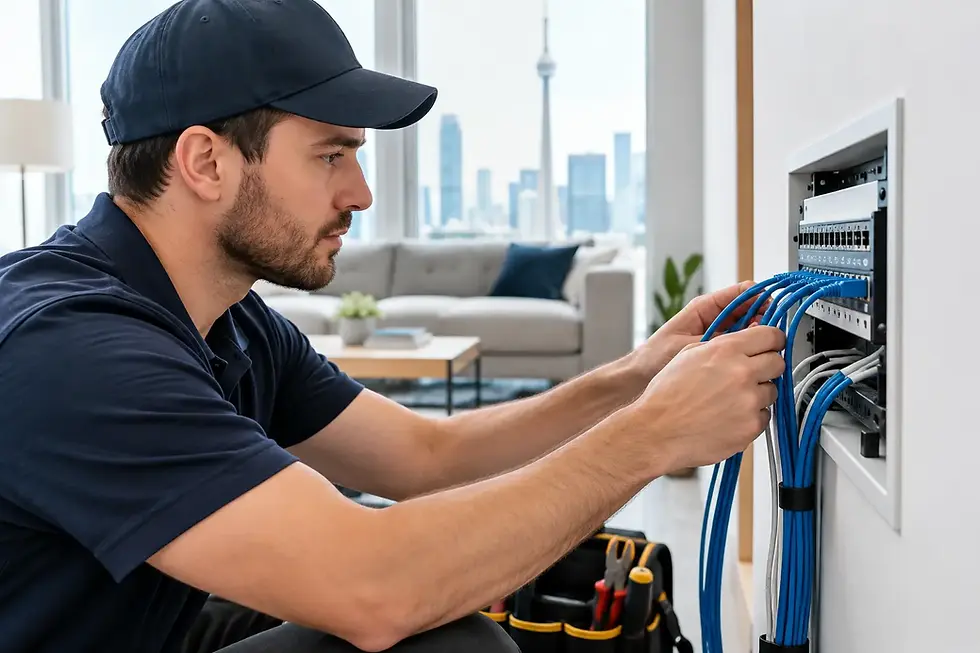
A wired camera system usually connects each camera to a central recorder using a physical cable. Many modern systems use Power over Ethernet, often called PoE. One network cable carries both power and data from the camera to the network video recorder, or NVR. This reduces the number of failure points at each camera location and gives the system a dedicated path for video.
Wireless cameras send video over Wi-Fi. Some plug into an outlet, while others run on rechargeable batteries. They can be excellent for a single hard-to-reach area or a quick addition to an existing system. Their reliability, however, depends more heavily on the quality of the Wi-Fi signal, available network capacity, battery condition, and cloud or app service.
Why wired cameras are usually more dependable
The main advantage of a wired system is consistency. A cable does not compete with phones, streaming TVs, gaming consoles, smart speakers, and neighbouring networks for wireless signal. Where a camera has a sound cable run and properly terminated connections, it has a stable route to the recorder.
Continuous power avoids a common weak point
PoE cameras receive constant power through the same cable used for video. There is no battery to charge, replace, or discover at two percent on a cold night. This matters for front entrances, driveways, retail counters, side doors, and other areas where continuous coverage is expected.
Battery cameras save energy by sleeping between events. That design is practical, but it can create a short delay while the camera wakes up and begins recording. A person may already be moving away from the detection area when recording starts. Cold weather can also reduce battery performance, which is worth considering for outdoor cameras in Southern Ontario.
Local recording gives you more control
Most wired systems record directly to an NVR with a hard drive installed at the property. The internet can go down and the cameras can still record locally, provided the system has power. Remote viewing may be unavailable until the connection returns, but the event is often still captured.
Many wireless cameras rely partly or entirely on cloud recording. That can be convenient, especially for simple installations, but it may require a subscription and dependable internet service. Some Wi-Fi cameras also accept local storage, yet their recording can still be affected by a weak signal or limited bandwidth.
Wired systems handle multiple cameras better
One Wi-Fi camera close to a quality router can work very well. The situation changes when a property needs six, eight, or more cameras sending high-resolution video. Each stream uses network capacity. If cameras, computers, video calls, music streaming, and smart-home devices all share an overworked Wi-Fi network, performance can become inconsistent.
A PoE system keeps camera traffic on dedicated cabling and can be configured separately from the general home or business network. That is especially useful for small businesses that need reliable camera coverage without disrupting point-of-sale devices, office computers, VoIP phones, or guest Wi-Fi.
Are wired cameras more reliable in every situation?
Not automatically. A poorly installed wired system is not more dependable than a properly placed wireless camera. Damaged cable, exposed connections, incorrect power budgeting, a low-quality recorder, or cameras positioned in the wrong locations can all create problems.
Installation is the trade-off. Running cable through finished walls, ceilings, attics, basements, masonry, or commercial spaces takes planning. The work should look clean, protect the cable from weather and physical damage, and place cameras where they actually identify people, vehicles, and activity. A camera high above a driveway may show movement, for example, without providing a useful facial view.
Wireless cameras have a clear place when cabling would be overly disruptive or when coverage is temporary. They can work well for a detached shed, a gate, a short-term renovation, or an interior area where a single camera is needed and strong Wi-Fi is already available. A plugged-in Wi-Fi camera is generally more dependable than a battery model because it removes battery maintenance from the equation.
Wired versus wireless: the practical differences
For primary perimeter security and ongoing business monitoring, wired PoE cameras are usually the stronger long-term option. They provide continuous power, stable communication, local recording, and better scalability. They also support higher-resolution cameras without placing the same demand on the Wi-Fi network.
Wireless systems are often easier and less costly to install at the beginning, especially for one or two cameras. They are flexible, convenient, and may be the right answer where cable runs are impractical. Over time, though, subscriptions, battery replacements, Wi-Fi upgrades, and troubleshooting can narrow that initial cost advantage.
The best setup is sometimes a hybrid. A homeowner may use wired cameras for the driveway, front door, backyard, and side entrance, then add a wireless camera where running cable is difficult. A small business may protect entrances, inventory areas, and parking with wired cameras while using a wireless unit for a low-priority temporary space.
Design matters as much as the camera type
Before choosing equipment, it helps to decide what each camera must accomplish. A camera watching a front entrance may need clear face-level coverage and night vision. A driveway camera may need enough detail to identify vehicles. A business may need reliable recording at doors, cash areas, receiving zones, or exterior access points.
The network and recorder also matter. A wired camera system needs enough NVR storage for the desired retention period, sufficient PoE capacity for every camera, and a properly configured network. If remote viewing is important, the installation should be secured with strong account credentials and sensible network settings, not simply connected and forgotten.
For outdoor cameras, placement should account for sun glare, snow buildup, rain exposure, and nearby lights. Motion settings need adjustment as well. A camera aimed at a busy street or swaying tree can produce constant alerts, while one aimed too narrowly may miss the route someone actually takes to a door.
When to choose a professionally installed wired system
A wired system is worth serious consideration if you need dependable 24/7 recording, plan to install several cameras, want local footage storage, or have areas where a missed event would be costly. It is also the practical choice when Wi-Fi already struggles at the far ends of the property.
For businesses, professionally installed camera cabling helps keep the setup tidy, protected, and easier to service as the operation grows. For homeowners, it avoids the frustration of dead zones, frequent battery charging, and cameras that are installed quickly but do not provide the view needed after an incident.
TechWise designs camera systems around the property rather than forcing every location into the same package. That includes assessing coverage areas, cable routes, recording needs, remote viewing, and the condition of the existing network before recommending wired, wireless, or mixed equipment.
A security camera should be judged by the footage it delivers on an ordinary night, during a storm, or after an internet interruption - not just by how easy it was to take out of the box. A thoughtful site assessment can turn that standard into a system that stays useful for years.